Abstract
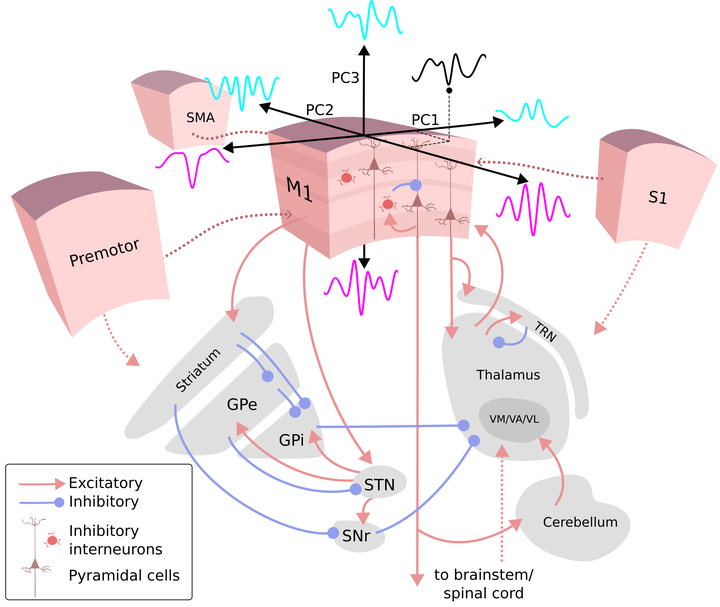
Neural activity in the beta band is increasingly recognized to occur not as sustained oscillations but as transient burst-like events. These beta bursts are diverse in shape, timing, and spatial distribution, but their precise functional significance remains unclear. Here, we review emerging evidence on beta burst properties, functional roles, and developmental trajectories and propose a new framework in which beta bursts are not homogeneous events but reflect distinct patterns of synaptic input from different brain regions targeting different cortical layers. We argue that burst waveform shape carries mechanistic and computational significance, offering a window into the dynamic integration of specific combinations of cortical and subcortical signals. This perspective repositions beta bursts as transient computational primitives, rather than generic inhibitory signals or averaged rhythms. We conclude by outlining key open questions and research priorities, including the need for improved detection methods, investigation into developmental and clinical biomarkers, and translational applications in neuromodulation and brain–computer interfaces.